

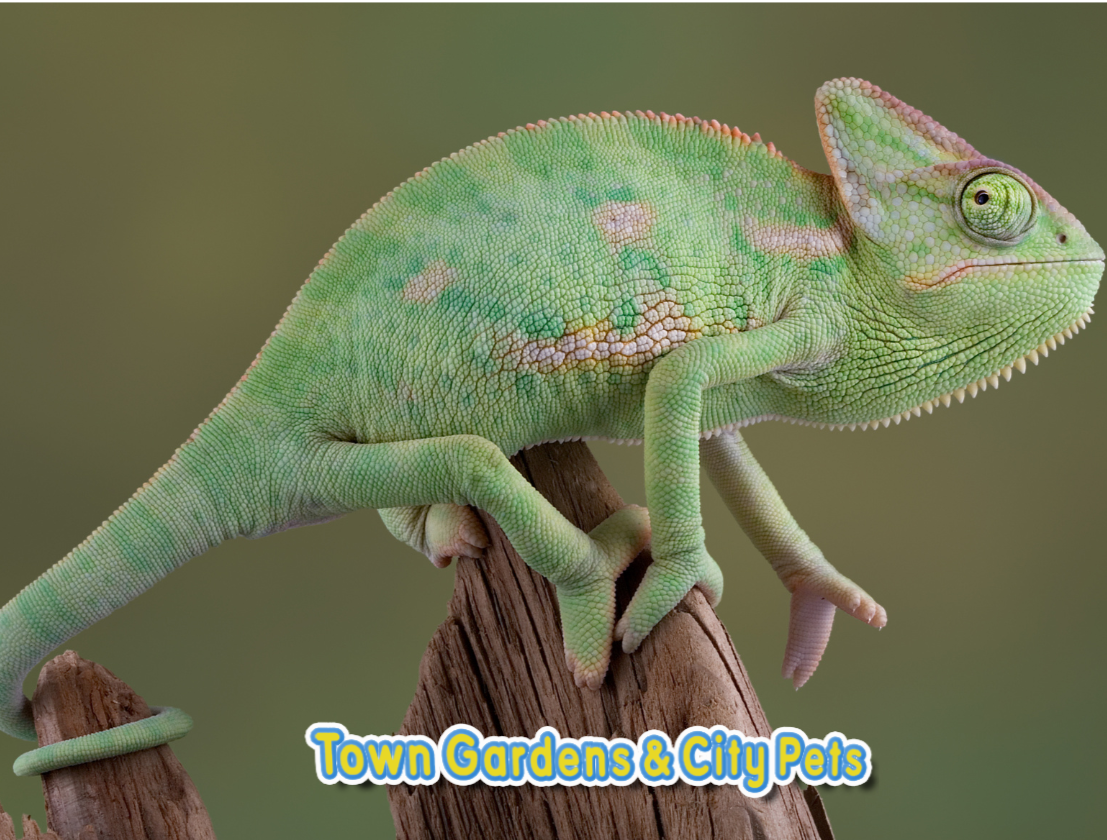
Veiled chameleons are solitary and territorial by nature, often preferring to be left alone. They are not typically social or cuddly pets, and frequent handling can cause them stress. When threatened or annoyed, they may display defensive behaviours such as puffing up, hissing, or showing bright colours to warn off perceived threats.
Despite their aloof temperament, they are fascinating to observe. Their ability to change colour is often influenced by mood, temperature, or communication, and their independent eye movement allows them to scan their surroundings while focusing on prey. They are arboreal, spending most of their time climbing and perching on branches, which reflects their natural behaviour in the wild. Veiled chameleons are best suited to patient keepers who enjoy observing their unique habits and striking beauty from a respectful distance.
Enclosure Requirements:
- Size: Minimum of 60 cm (width) x 60 cm (depth) x 120 cm (height) for adults. Taller enclosures are ideal, as they are arboreal and need plenty of climbing space.
- Material: Use a mesh or screen enclosure to provide ventilation, as poor airflow can lead to respiratory issues.
You may see them in glass or wooden enclosures at the pet store, this is because it is harder to maintain the ambient temperature in a large retail environment which leads to a lowered and dangerous level of heat in a mesh enclosure for the chameleon in the pet store. A mesh enclosure at home in a room at room temperature will ensure the chameleon will maintain the the correct heating within its enclosure and environment.
If your home is cold and suffers draughts, we would recommend a mesh topped glass enclosure or a well ventilated wooden vivarium to retain the required tempuratures. - Décor: Include plenty of branches, vines, and plants (real or artificial) for climbing and cover. Safe live plants such as Ficus, Pothos, or Hibiscus can help maintain humidity.
Temperature and Heating:
- Basking Spot: 30–32°C during the day.
- Ambient Temperature: 22–26°C.
- Night-Time Temperature: 18–22°C.
- Use a basking lamp to create a warm spot and a ceramic heat emitter if additional warmth is needed at night. Always monitor temperatures with reliable thermometers placed in different parts of the enclosure.
Lighting Requirements:
- Provide 10–12% UVB lighting using a linear tube bulb. UVB is crucial for calcium absorption and preventing metabolic bone disease.
- Lights should be on for 12 hours a day and turned off at night to mimic a natural day-night cycle. Replace UVB bulbs every 6–12 months, depending on the manufacturer’s guidelines.
Humidity:
- Maintain humidity levels between 50–70%.
- Mist the enclosure 2–3 times daily or use an automatic misting system to ensure proper hydration. A dripper system is also recommended, as veiled chameleons prefer to drink water droplets rather than standing water.
Diet:
- Main Diet: Feed a variety of appropriately sized live insects, such as crickets, locusts, roaches, and the occasional waxworm or mealworm as a treat.
- Greens: Offer leafy greens such as collard greens, kale, or dandelion leaves.
- Supplements: Dust insects with calcium powder (without D3) at every feeding and provide a multivitamin supplement once a week. Use calcium with D3 twice a week if your chameleon doesn’t receive enough UVB exposure.
Hydration:
Veiled chameleons rarely drink from standing water, so regular misting and a dripper system are essential. Watch for signs of dehydration, such as sunken eyes or yellow urates.
Handling:
Chameleons are solitary and do not enjoy being handled frequently. Minimise handling to reduce stress, and always support their body fully when it is necessary.
Common Health Issues:
- Metabolic Bone Disease: Caused by insufficient UVB or calcium. Ensure proper lighting and supplementation.
- Respiratory Infections: Often a result of high humidity without ventilation or cold temperatures. Maintain proper enclosure conditions.
- Dehydration: Ensure regular misting and hydration sources.
- Stress: Signs include darkened colouring, lack of appetite, or excessive hiding. Minimise disturbances.
Additional Tips:
- Veiled chameleons are territorial and should be housed alone.
- Keep the enclosure in a quiet room away from heavy foot traffic or loud noises.
- Regularly clean the enclosure and remove uneaten food to maintain hygiene.
Summary:
Veiled chameleons are captivating reptiles, but they require specific care to thrive. Providing a spacious, well-ventilated enclosure, the correct lighting and heating, and a varied diet will ensure they live a healthy and enriched life. By understanding their needs and monitoring their health, you can offer a comfortable and fulfilling environment for your chameleon.