

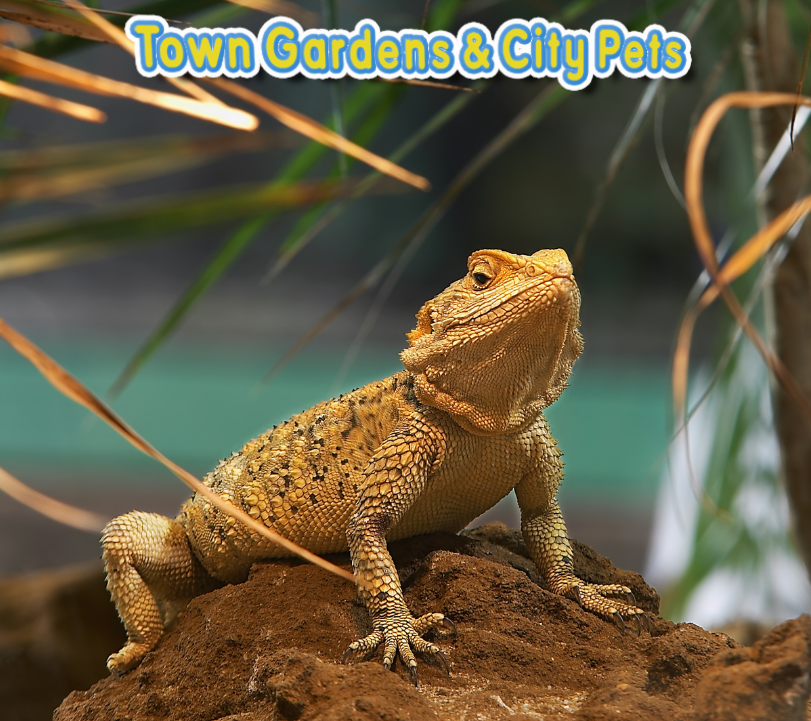
Bearded dragons are friendly, hardy reptiles known for their docile temperament and engaging behaviour. They are diurnal and enjoy interacting with their owners, making them an excellent choice for beginners and experienced reptile keepers alike. With proper care, including a spacious enclosure, appropriate lighting and heating, and a balanced diet, they can live long, healthy lives and become wonderful companions.
Housing Requirements
- Enclosure Size: Minimum of 120 cm (L) x 60 cm (W) x 60 cm (H) for one adult. Larger is always better.
- Substrate: Use safe substrates like reptile carpet, non-adhesive shelf liner, or tile. Avoid loose substrates such as fine sand or wood chips as they can cause impaction if ingested. The mixed rock substrate like Pro-Rep Beardie Life is a very popular choice to mimic their natural desert environment, feed from a large bowl or flat debris-free surface.
- Decor: Provide hides, branches, and rocks to mimic their natural environment and for basking opportunities.
Temperature & Lighting
- Basking Spot Temperature: 37–43°C.
- Cool Side Temperature: 22–27°C.
- Night-Time Temperature: 18–22°C. Use a ceramic heat emitter if needed, but avoid bright lights at night.
- UVB Lighting: A 10–12% UVB tube lighting covering two-thirds of the enclosure. Position the UVB light 30–45 cm above the basking area and replace it every 6–12 months.
- Know your morph: Other morphs require different requirements, the above information applies to a standard morph: These are the wild-type bearded dragons with natural colours and patterns. Examples: Classic, Normal, Wild Type.
Information about other morphs can be found at the bottom of this page.
Humidity
- Maintain a humidity level of 30–40%. Use a hygrometer to monitor levels.
- Provide a water bowl and mist occasionally if necessary, but avoid high humidity as it can lead to respiratory issues.
Diet
- Insects: Feed gut-loaded and calcium-dusted live insects such as crickets, locusts, and dubia roaches. Younger dragons require more protein, so offer daily. Adults can have insects 2–3 times a week.
- Vegetables: Offer a daily mix of leafy greens (e.g., collard greens, dandelion leaves) and other safe vegetables like grated squash or bell peppers.
- Fruits: Provide occasional treats such as small amounts of berries, melon, or apple (without seeds).
- Calcium & Vitamins: Dust food with calcium powder 5–7 times a week for juveniles and 2–3 times for adults. Add a multivitamin supplement twice weekly.
Handling and Behaviour
- Bearded dragons are generally docile and tolerate handling well. Handle them gently and support their body fully.
- Avoid sudden movements to prevent stress.
- Allow them to acclimate to your presence before frequent handling.
Cleaning Schedule
- Daily: Spot clean waste and uneaten food. Replace water daily.
- Weekly: Wipe down enclosure surfaces and clean decor.
- Monthly: Deep clean the entire enclosure using a reptile-safe disinfectant.
Common Health Concerns
- Metabolic Bone Disease (MBD): Caused by a lack of UVB or calcium. Prevent with proper lighting and supplementation.
- Respiratory Infections: Result from high humidity or low temperatures. Maintain proper enclosure conditions.
- Impaction: Avoid loose substrates and ensure proper diet size.
Additional Notes
- Regular vet check-ups are recommended for monitoring health.
- Always wash hands before and after handling your dragon to prevent the spread of bacteria like salmonella.
Additional Morph information:
Hypo Morphs
These have reduced black pigmentation, appearing brighter and more pastel-coloured.
- Examples: Hypomelanistic (Hypo), Hypo Translucent.
- Care Requirements:
- Temperature: Similar to standard morphs, but ensure a basking spot closer to 37–40°C (99–104°F) to avoid overheating lighter skin.
- UVB: 10–12% UVB, essential to avoid stress-related shedding issues.
Translucent Morphs
These have partially see-through skin and sometimes blue tints as juveniles.
- Examples: Translucent (Trans), Hypo Trans.
- Care Requirements:
- Temperature: Basking spot 37–40°C (99–104°F); avoid overheating as translucent skin is more sensitive.
- UVB: 10–12% UVB, positioned properly to avoid burns due to delicate skin.
Leatherback Morphs
These have smoother scales with reduced spikiness.
- Examples: Leatherback, Hypo Leatherback.
- Care Requirements:
- Temperature: Similar to standard morphs, but monitor shedding, as smoother skin requires slightly higher humidity (35–45%).
- UVB: 10–12% UVB, ensuring coverage of at least 2/3 of the enclosure.
Silkback Morphs
These are scaleless bearded dragons with completely smooth skin.
- Examples: Silkback (Silkie).
- Care Requirements:
- Temperature: Lower basking temperatures (35–40°C/95–104°F) as they are more prone to burns.
- Humidity: Slightly higher (40–50%) to prevent dry skin and aid in shedding.
- UVB: Use low-intensity UVB (8–10%) or ensure shaded areas to prevent skin damage.
- Special Note: Require extra care with hydration (regular baths or misting).
Colour Morphs
These are selectively bred for specific colours, like bright reds, oranges, or yellows.
- Examples: Citrus, Sandfire, Red, Tiger.
- Care Requirements:
- Temperature: Standard temperature range (37–43°C/99–110°F for basking).
- Humidity: 30–40%, the same as wild types.
- UVB: 10–12% UVB.
Giant Morphs
These are bred to grow larger than standard dragons.
- Examples: German Giant.
- Care Requirements:
- Temperature: Maintain standard temperature ranges, but they may require a larger basking area.
- UVB: 10–12% UVB, scaled to the size of their larger enclosure.
- Diet: Larger dragons require proportionally more food, with a balanced mix of protein and vegetables.
Summary Table
| Morph | Temperature (°C) | Humidity (%) | UVB Range | Special Notes |
|---|---|---|---|---|
| Standard | 37–43 | 30–40 | 10–12% | Regular care. |
| Hypo | 37–40 | 30–40 | 10–12% | Bright skin, avoid overheating. |
| Translucent | 37–40 | 30–40 | 10–12% | Sensitive, avoid burns. |
| Leatherback | 37–43 | 35–45 | 10–12% | Smoother skin, monitor shedding. |
| Silkback | 35–40 | 40–50 | 8–10% | Extra hydration and care with burns and skin issues. |
| Colour Morphs | 37–43 | 30–40 | 10–12% | Colour-specific patterns. |
| Giant | 37–43 | 30–40 | 10–12% | Larger basking area and increased food needs. |
Each morph has subtle differences, so adapt their care to their specific needs while maintaining proper husbandry practices!