

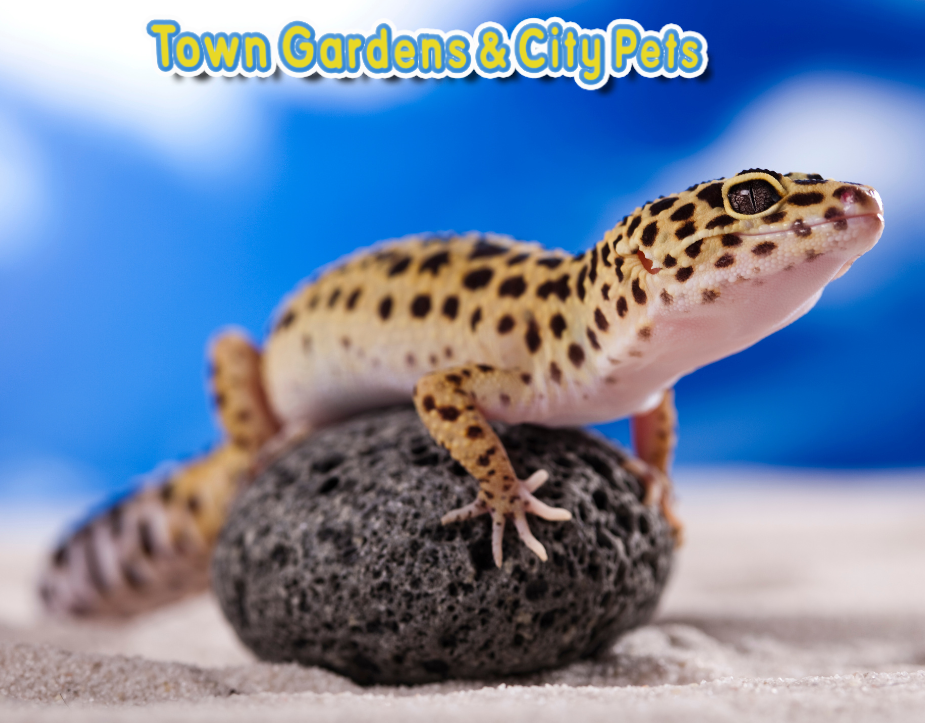
Leopard Gecko Care Sheet
Leopard geckos are known for their calm and docile temperament, making them one of the most popular reptile pets. They are generally easy-going and tolerant of handling, especially when acclimated to their owner. With regular and gentle interaction, they can become quite trusting, though each gecko has its own personality – some may be more curious and active, while others prefer to stay hidden and observe their surroundings.
Leopard geckos are crepuscular, meaning they are most active during dawn and dusk. During the day, they often rest in hides, but in the evenings, they can be seen exploring their enclosure. They are ground-dwelling reptiles, characterised by their stocky build, large, expressive eyes, and a fat tail, which serves as a storage reserve for energy. Their vibrant colour patterns and gentle disposition make them fascinating pets to watch and care for. Overall, leopard geckos are hardy, personable reptiles that thrive in a well-maintained environment.
1. Enclosure Setup
Vivariums
- Size: A 3-4ft (90-120cm) wooden vivarium is ideal for adult leopard geckos.
- Placement: Position the vivarium away from direct sunlight, draughts, or unstable surfaces. Ensure it’s secure and flat.
Heating & Lighting
-
Temperature and Heating overview:
- Basking Spot: 30–32°C.
- Cool Side: 22–24°C.
- Night-Time Temperature: Can drop to 18–22°C.
- Basking Spot: Use an Arcadia Halogen Flood Lamp or Arcadia Solar Basking Floodlight with a dimming thermostat to maintain temperatures of 28-32°C in the warm area. Both bulbs mentioned above offer the IR-A and UVA exposure required to keep your Leo happy and healthy.
Place the thermostat sensor near the basking spot. - Overnight Heating: This is optional so long as your home maintains room temperature throughout the day and overnight. Install a deep heat projector in the middle to cool end of the vivarium. Set the the night temperature to 18-22°C.
- UVB Lighting: Use a ProT5 UVB tube (7%). Install it unobstructed by glass or plastic, alongside the basking bulb.
- Thermometers & Hygrometers: Place a thermometer in the cooler area and a hygrometer in the centre to ensure 30-40% humidity.
Substrate
- Recommended: ProRep Leo Life substrate. Line the bottom of the vivarium evenly.
- Reptile carpet, paper towels, or loose substrates like calcium-free sand rocky mixes designed for reptiles are also suitable. Avoid fine sand or other loose substrates that can cause impaction. The age of the Leopard Gecko determines what substrate is best.
Hides & Decor
- Provide 3 hides: one on the warm side, one in the centre (moist hide), and one on the cool side.
- Fill the moist hide with moss and mist as needed to maintain moisture.
- Add cork bark, artificial plants, and other decor to create shade and climbing opportunities.
Water Dish
- Use a shallow water dish. Place it on the cooler side to maintain proper humidity levels.
2. Feeding and Nutrition
Diet
- Leopard geckos are insectivores. Feed them gut-loaded insects such as:
- Crickets
- Mealworms
- Dubia roaches
- Occasional waxworms (as treats)
Feeding Schedule
- Adults (12+ months): Feed every 2-3 days.
- Juveniles (0-12 months): Feed daily.
Supplementation
- Dust food with calcium powder (without D3) at every feeding.
- Add a multivitamin powder (with D3) once a week.
Hydration
- Fresh water should always be available in the water dish. Check daily and replace as needed.
3. Environment Maintenance
Daily Tasks
- Remove uneaten food and clean up waste.
- Refill the water dish with fresh water.
- Check and maintain the moisture level in the humid hide.
Weekly Tasks
- Clean and disinfect the vivarium, hides, and decor using a reptile-safe cleaner.
Monthly Tasks
- Perform a deep clean of the entire enclosure.
- Replace any worn-out or damaged items.
4. Leopard Gecko Behaviour
Acclimatisation
- When introducing your gecko to its new home, gently place them in the enclosure and allow your leopard gecko time to explore and adjust.
Behaviour Monitoring
- Healthy geckos will explore, use their hides, and bask under the heat lamp. Watch for signs of stress, such as hiding excessively or loss of appetite.